Hawaiian Activities — island tours, luaus, and adventures across Oahu, Maui, Kauai, and the Big Island.
You float face down in black water holding a lit board, and animals with sixteen-foot wingspans barrel-roll through the glow a few inches beneath you. It is the Big Island’s signature evening, and it is far gentler than it sounds.
Quick Answer: Boats leave the Kona coast around sunset for one of two lit feeding sites. You spend 30–45 minutes holding a floating light board while manta rays feed below. It runs year-round, requires no swimming ability beyond comfort with your face in the water, and the animals are completely harmless.
TL;DR
- Where: Kona coast, Big Island — Manta Village or Manta Heaven
- Season: year-round, rays are resident
- In-water time: roughly 30–45 minutes
- Swimming needed: minimal — you hold a floating lighted board
- Risk: none from the rays; seasickness is the real variable
- Golden rule: look, never touch
What Actually Happens
The mechanism is simple and slightly wonderful. Bright downward-facing lights attract plankton. Plankton attracts manta rays, which are filter feeders. Over years of consistent lighting at the same two spots off Kona, the rays have learned that lights mean dinner — so the encounter is reliable in a way that most wild-animal experiences are not.
A typical evening: board a boat late afternoon or at dusk, run 10 to 25 minutes to the site, get a safety and etiquette briefing on the way, then enter the water in small groups. Snorkelers hold the edge of a floating raft or board rigged with lights pointing down, face in the water, legs out behind. You do not swim. You hang on and watch.
Below you, rays loop and roll through the plankton column, mouths wide, often passing within inches of the board. Divers do the mirror image of this from the seabed, kneeling with lights aimed upward. Both groups are looking at the same animals from opposite sides of the same lit water.
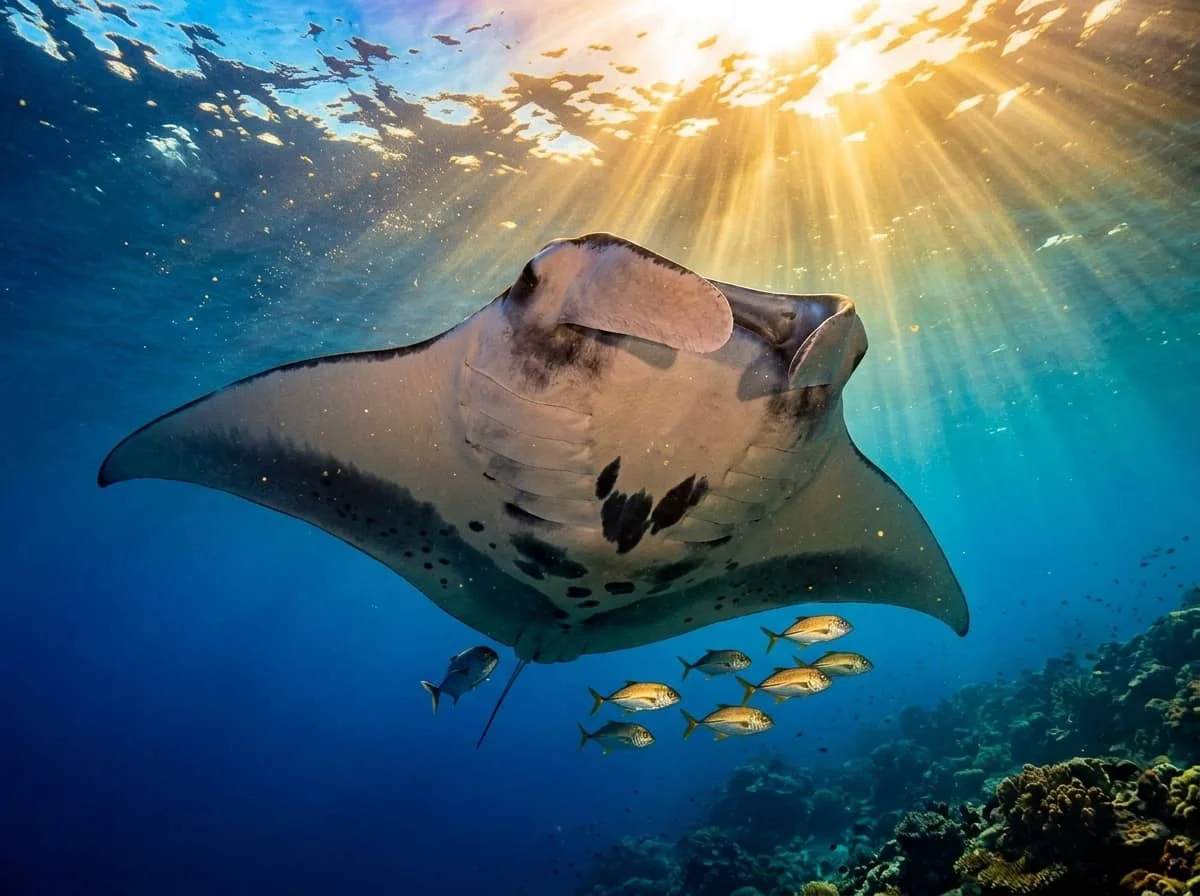
The Two Sites
Almost every Kona operator runs to one of two locations. Neither is meaningfully better; what differs is where you leave from and how long you sit on a boat.
| Site | Area | Typically Departs | Suits |
|---|---|---|---|
| Manta Village | South Kona, off Keauhou Bay | Keauhou Bay | Shortest transit; good if you are staying in the Keauhou or Kailua area |
| Manta Heaven | North, near Garden Eel Cove | Honokohau Harbor | Convenient from the airport side and the northern resorts |
If you are prone to motion sickness, the shorter run matters more than the site name. Take medication before boarding — an hour ahead is the usual advice, and after you feel unwell is too late.
Snorkel or Dive?
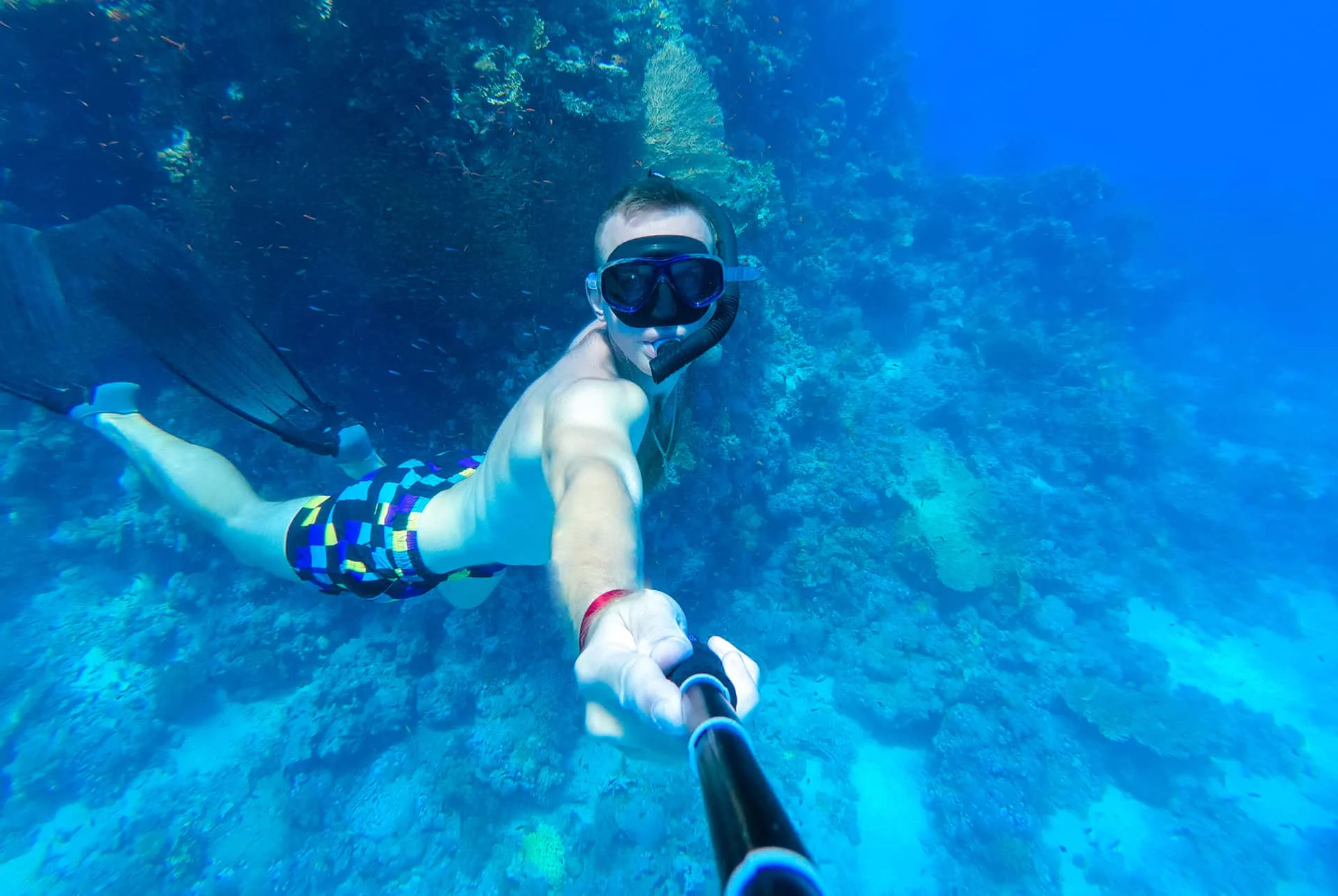
Snorkel if you want the shortest path to the experience. No certification, no equipment burden, and the surface is arguably the better seat — the rays come up to feed just below the lights, so they are often closest to the snorkelers.
Dive if you are certified and want the full theatre of it: kneeling on sand in a circle of divers with the rays wheeling overhead against the lights. It is spectacular, but it demands a night-dive comfort level that not everyone has.
Nervous non-swimmers routinely do the snorkel version successfully. Wetsuits provide buoyancy, the board holds you up, and crew stay in the water with the group. Tell the crew if you are anxious — they will put you at the end of the board with someone alongside.
What a Manta Ray Snorkel Costs in 2026
| Tour | Departs | What makes it different | Price |
|---|---|---|---|
| Sunset & Manta Ray Snorkel Combo | Keauhou | Sunset sail first, then the lights | $135 |
| Manta Magic Night Snorkel | Keauhou Harbor | Up to 40 min on the light board; non-swimmers welcome | $139 |
| Whale Watch & Manta Snorkel Combo | Kona | Winter only: humpbacks by day, mantas after dark | $219 |
All three run from the Kona coast and all three visit the same lit feeding sites, so the choice is about how much evening you want around the encounter. $135 is the cheapest way to see manta rays in Hawaii, and the $219 winter combo is the only one that pairs them with humpback whales.
Choosing Your Trip
- The straightforward version: Manta Magic Night Snorkel departs Keauhou Harbor with up to 40 minutes on the light board. If you want the encounter and nothing else, this is it.
- Make an evening of it: the Sunset & Manta Ray Snorkel Combo runs out for golden hour first, so you get the Kona sunset from the water before the lights go on.
- Winter only: between December and April, the Whale Watch & Manta Snorkel Combo pairs an hour of humpback watching with the night snorkel, both guided by marine biologists. Two of Hawaii’s best wildlife encounters in one departure.
- Compare the lot: all Big Island manta ray tours, or the wider Big Island watersports and snorkelling tours.
“People book it expecting to be frightened and come back describing it as calm. You are floating still, the water is warm, and something enormous and harmless is doing slow somersaults under your chest.”
Conditions and the Rules
Water temperature sits in the mid-to-high 70s°F year-round. It still feels cool after 40 minutes of floating without moving, which is why wetsuits are standard rather than optional.
Do not touch the rays. This is the one rule that matters. Manta skin carries a protective mucus coating, and human contact strips it and opens the animal to infection. Keep hands on the board.
Skip the sunscreen before an evening trip. You do not need it after dark, and it washes off into the feeding site. If you must use it during the day, make it reef-safe.
Cancellations happen. Operators call trips off for swell and surge, usually on the afternoon of. Book earlier in your stay so a weather cancellation leaves room to rebook rather than ending your chance.
Travelling with children? Our guide to the Big Island with kids sorts every bookable activity in Kona and Hilo by minimum age.
In winter, Big Island whale watching pairs a humpback whale watch with a manta ray snorkel in one three-hour trip.
Frequently Asked Questions
Are manta rays dangerous?
No — no stinger, no teeth of consequence. They filter plankton. The risk runs the other way, which is why touching them is prohibited.
Do I need to swim well?
No. You hold a floating lighted board in a wetsuit and stay face down. Comfort with your face in the water is enough.
What is the best season?
Year-round. Winter adds whale-watch pairings; summer generally means calmer seas.
Village or Heaven?
Pick by departure point and transit time. The encounter itself is comparable at both.
What if no rays turn up?
Sightings are typically high-eighties to low-nineties percent but never guaranteed. Many operators offer a free repeat — confirm before you book.
How much does a manta ray night snorkel cost?
From $135 for the Sunset and Manta Ray Snorkel Combo, $139 for the Manta Magic night snorkel, and $219 for the winter Whale Watch and Manta Snorkel Combo. All depart the Kona coast on the Big Island.
How long do you spend in the water with the manta rays?
Roughly 30 to 45 minutes on the light board, with up to 40 minutes on the Manta Magic trip. The whole evening, including the boat ride out and back, runs about two hours.
Keep reading
Book the Kona evening everyone talks about.
Night snorkels, sunset combos, and winter whale pairings on the Big Island.
Manta Ray Tours · Watersports · All Big Island Tours · (808) 207-9427
Disclaimer: manta rays are wild animals and sightings are not guaranteed. Departure points, in-water times, and operator policies vary by trip and are subject to weather cancellation. Confirm details with your operator at the time of booking.