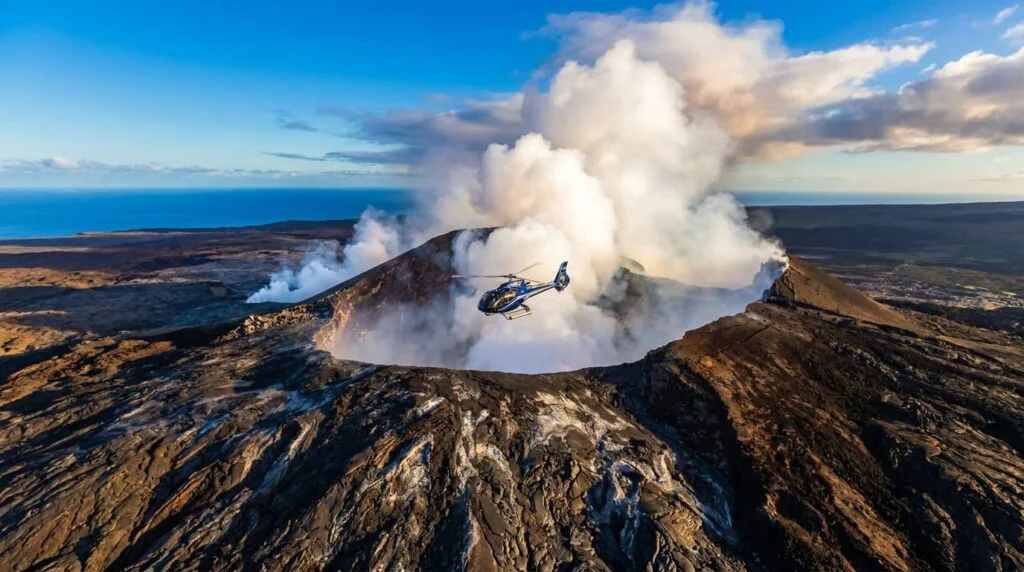
Hawaiian Activities — island tours, luaus, and adventures across Oahu, Maui, Kauai, and the Big Island.
A third of a million acres, a caldera that erupts in episodes rather than on schedule, and a road that runs nineteen miles to the sea with no fuel on it. Here is how to plan the day properly.
Quick Answer: Give the park a full day and base the plan on the landscape, not on lava. Check USGS HVO for eruption status and NPS conditions for closures on the morning you go. Hilo is 45 minutes away; Kona is 2–3 hours, which is why most Kona visitors book a guided tour.
TL;DR
- Eruption is episodic — nobody can guarantee lava; check USGS the morning of
- Closures are common — gas, storms, and seismicity shut overlooks at short notice
- Core stops: caldera rim, Nahuku lava tube, Kilauea Iki, Chain of Craters Road
- Time needed: 4–5 hours minimum, a full day to do it properly
- Bring: layers, rain gear, closed shoes, full tank, headlamp for dark
- From Kona, expect an 11–12 hour day — guided is usually the better call
What You Are Actually Going to See
Hawai’i Volcanoes National Park covers a third of a million acres running from sea level to the 13,681-foot summit of Mauna Loa, and the part most visitors picture — an incandescent crater — is only ever one item on the list. Kilauea’s summit caldera at Halema’uma’u is the headline. Behind it sit lava tubes you can walk through, a rainforest of tree ferns, a hardened 1974 crater floor, petroglyph fields, and a coastline where the island is still being built.
The honest framing is this: the park is spectacular whether or not lava is visible on the day you arrive. Visitors who plan around a glow and get clouds tend to leave disappointed. Visitors who plan around the landscape and get a glow as well leave stunned. Set your expectations the second way round.
Eruption Status: How to Check Before You Drive
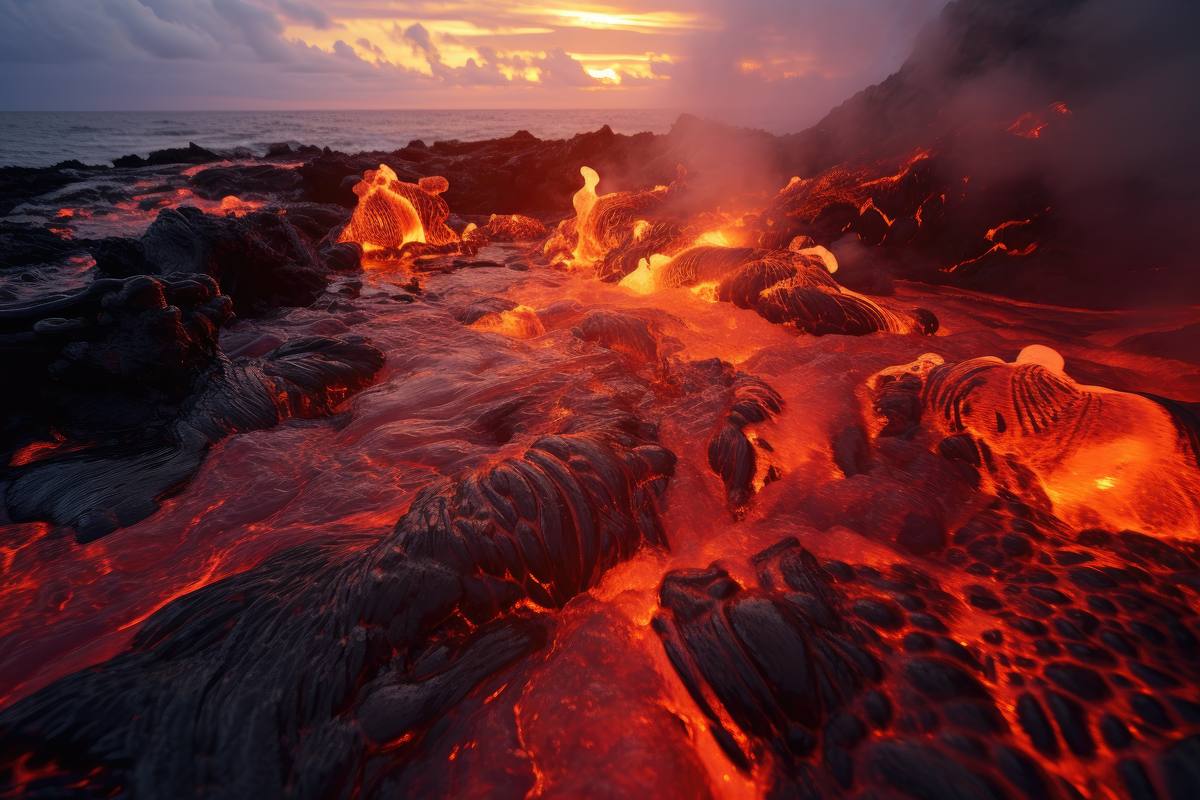
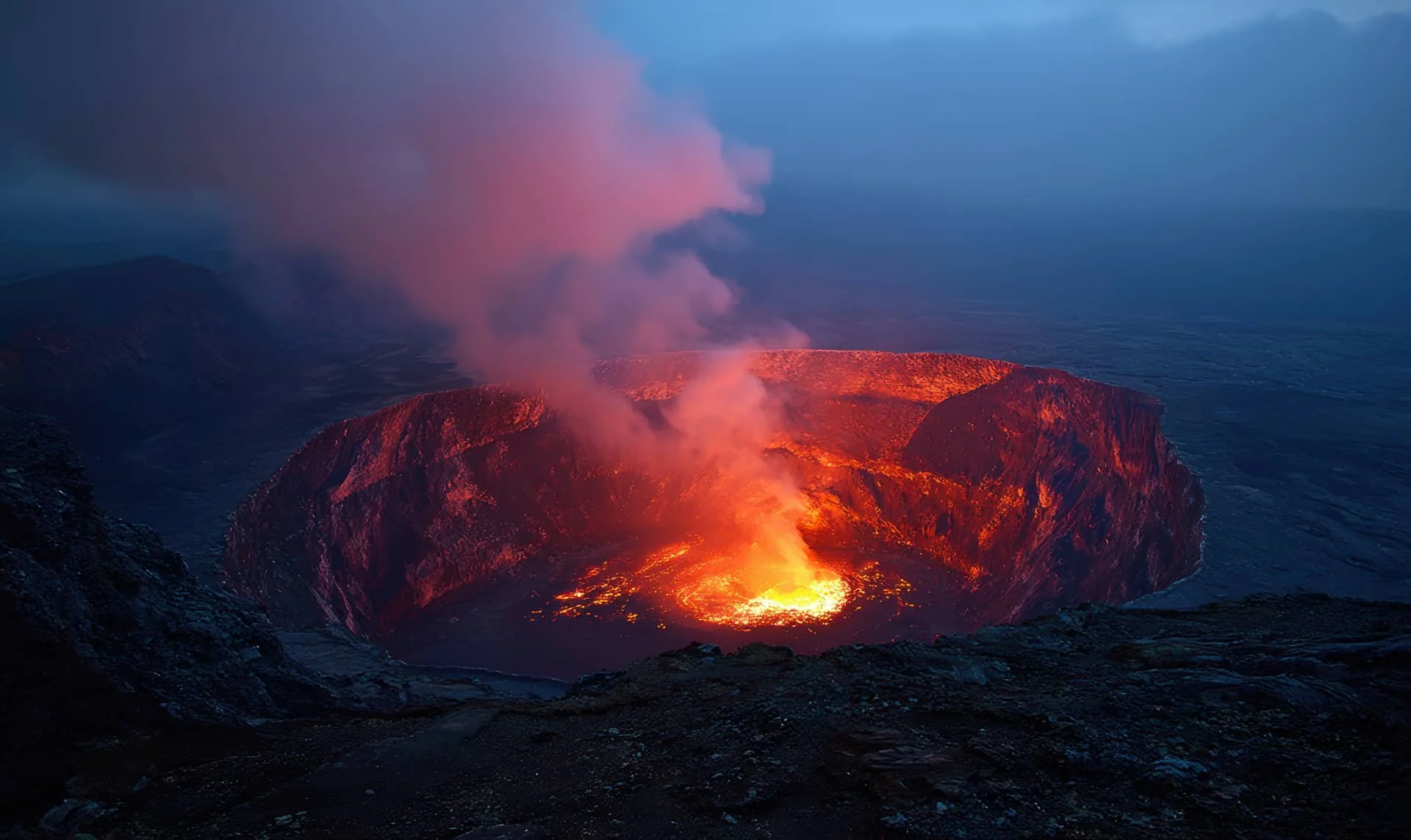
Kilauea has been erupting in episodes rather than continuously. Through 2026 the Halema’uma’u vents have produced repeated fountaining episodes, some throwing lava several hundred feet with plumes visible for miles. Episodes can last hours to days and then pause for weeks.
Because of that rhythm, nobody can promise you lava — including any tour operator who says otherwise. What you can do is check the live picture the morning you go:
- USGS Hawaiian Volcano Observatory publishes daily Kilauea updates and runs live webcams pointed into the caldera. This is the authoritative source for whether anything is erupting right now.
- NPS park conditions for Hawai’i Volcanoes lists overlook closures, road status, and any full or partial park closure. Storm damage, volcanic gas, and seismic activity all close areas at short notice, sometimes for extended periods.
- Vog and weather matter as much as the eruption. Summit elevation is around 4,000 feet, it rains often, and sulphur dioxide can force closures on the downwind side.
Check both the morning of, not the week before. A guided tour helps here precisely because operators track conditions daily and reroute around closures.
The Core Stops, Ranked by What They Give You
| Stop | Time needed | Why it earns the stop |
|---|---|---|
| Kilauea Overlook / caldera rim | 30–45 min | The main event. Steam, scale, and the eruption viewpoint when a vent is active |
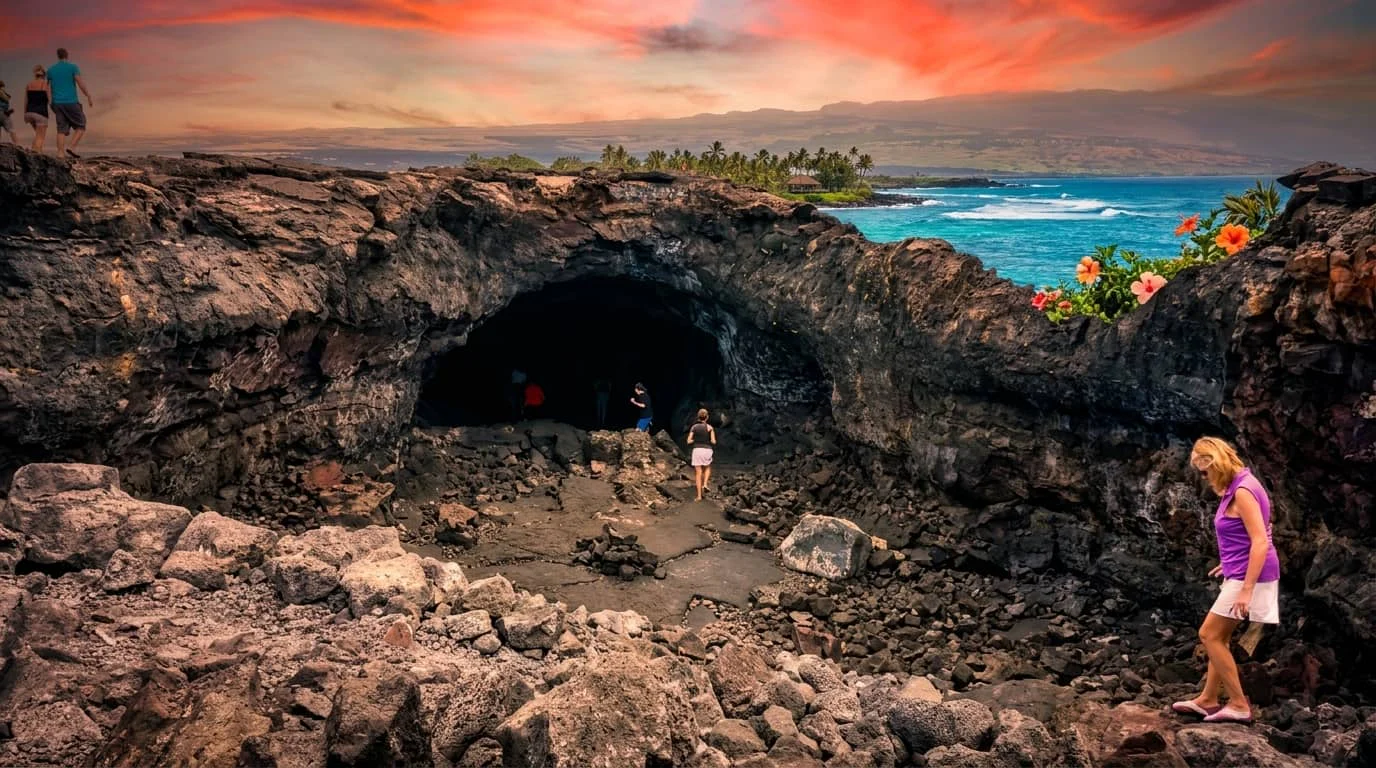
| Nahuku (Thurston Lava Tube) | 30 min | Walk through a 500-year-old lava conduit surrounded by tree-fern rainforest |
| Kilauea Iki Trail | 2–3 hrs | Descend 400 feet and cross a crater floor that was a lava lake in 1959 |
| Chain of Craters Road | 2–3 hrs return | 19 miles down to the sea past pit craters and vast old flows; no services |
| Holei Sea Arch & lava fields | 30 min | Where the flows reached the ocean and built new coastline |
| Devastation Trail | 20 min | Easy paved loop through a cinder landscape from the 1959 eruption |
A first visit that hits the caldera rim, Nahuku, and a drive partway down Chain of Craters Road takes about four to five hours inside the park. Adding Kilauea Iki makes it a full day.
Self-Drive or Guided?
Self-drive gives you your own timing and is cheapest if you already have a rental car and are staying in Hilo or Volcano Village. You will want a full tank, a rain layer, and a plan for the fact that Chain of Craters Road has no fuel, food, or water for 19 miles.
Guided wins for three specific groups: cruise passengers on a fixed clock, visitors based in Kona facing a long drive each way, and anyone who wants the geology explained rather than read off a sign. Guides also carry the current closure picture, which is worth more here than at almost any other national park.
For a full unhurried day from the wet side, the Big Island Volcano Private Tour from Hilo runs nine hours at your pace, and the Ultimate Hilo Volcano Adventure gives six private hours in the park. If you would rather assemble your own itinerary, the Custom Volcano Park Tour builds a 7.5-hour day around the stops you choose. Cruise arrivals should look at the Volcano Park Shore Excursion, which is built around ship timings, or the eight-hour Frozen Fire Private Shore Excursion.
Want transport only, with the day yours to shape? The Private Volcano Shuttle supplies a driver and leaves the itinerary to you.
Going Deeper: Hiking, Air, and After Dark
On foot. Kilauea Iki is the classic — down through rainforest, across a crater floor still venting steam, back up the far wall. For a guided version that adds an underground section, the Private Kilauea Iki & Lava Tube Hike combines crater floor and lava tube. Fitter walkers wanting the caldera proper can take the Elite Volcano Hike from Kona.
From the air. A helicopter is the only way to see active vents and flow fields that no road approaches, and it is entirely weather-dependent rather than closure-dependent — a useful hedge when ground overlooks shut. The Hilo Volcano Helicopter Tour pairs a 45-minute flight with ground time; the Kona Volcano Helicopter & Ground Tour does air and earth in one day from the dry side.
After dark. Any glow reads far more dramatically at night, and the summit’s darkness is also excellent for stars. The Evening Volcano Tour from Kona is built around sunset, coffee, and crater glow.
Not on the Big Island? You can still do it as a day trip — the Flexible Big Island Volcano Tour from Oahu flies you over for a helicopter and custom ground day, and there is a Private Volcano Helicopter Tour from Kauai.
What to Bring, and What Catches People Out
- Layers and rain gear. The summit sits near 4,000 feet and is routinely 20°F cooler than Kona, wet, and windy.
- Closed shoes. Lava rock is abrasive and uneven; sandals are a bad idea on every trail here.
- A full tank and water. Chain of Craters Road has no services at all, and it is a 38-mile round trip.
- A headlamp if you are staying for dark. Phone torches are not enough on unlit crater-rim paths.
- Respect the closures. Ground near vents can be undercut and unstable, and volcanic gas is genuinely hazardous. Closed means closed.
- Check your park pass. Entry is per vehicle and valid seven days; the America the Beautiful pass covers it.
“Plan the day around the park, not around the lava. The caldera, the tubes, and the crater floors are extraordinary on any Tuesday. If a vent happens to be fountaining while you are standing there, that is the bonus, not the baseline.”
Where to Base Yourself
Volcano Village sits minutes from the entrance and is the only sensible base if night viewing is the point. Hilo is about 45 minutes away and works well for a relaxed day trip. Kona is two to three hours each way, which turns any park visit into an 11–12 hour commitment — doable, and the reason most Kona-based visitors book a guided tour rather than drive it themselves. We compare the two sides in detail in our Kona vs Hilo volcano tour guide.
Browse the full range: Big Island volcano tours, helicopter tours, hiking tours, or everything on the Big Island.
For a day on two wheels, bike tours in Hawaii compares the self-paced Haleakala downhill rides with the Big Island’s e-bike tour across the 2018 lava coast. Arriving by cruise ship? Our guide to cruise ship days in Hilo covers what fits into a single port call.
Frequently Asked Questions
Is Kilauea erupting right now?
Kilauea erupts in episodes rather than continuously. Check the USGS Hawaiian Volcano Observatory daily update and live webcams on the morning of your visit.
How long do you need at Hawaii Volcanoes National Park?
Four to five hours covers the caldera rim, Nahuku lava tube, and part of Chain of Craters Road. A full day lets you add the Kilauea Iki crater hike.
Can you see lava at Hawaii Volcanoes National Park?
Sometimes. When a vent is active, the caldera overlooks near the entrance are the viewing spot. Between episodes there is no visible lava, though the park is still worth the day.
Should you visit the volcano from Kona or Hilo?
Hilo is about 45 minutes from the park; Kona is two to three hours each way. From Kona, a guided tour is usually the better use of the day.
What should you wear to Hawaii Volcanoes National Park?
Layers, a rain jacket, and closed walking shoes. The summit is around 4,000 feet, often 20°F cooler than the coast, and it rains frequently.
Keep reading
- Private volcano tours: when a group rate beats per-person pricing
- Why crater glow is an evening booking
Stand on the rim of an active volcano.
Guided park days, crater hikes, helicopter flights, and evening glow tours across the Big Island.
Volcano Tours · Helicopters · All Big Island · (808) 207-9427
Disclaimer: eruption activity, road and overlook closures, and park entry rules change frequently and sometimes without notice. Confirm current status with the USGS Hawaiian Volcano Observatory and the National Park Service before travelling, and treat all posted closures and warnings as binding.