Hawaiian Activities — island tours, luaus, and adventures across Oahu, Maui, Kauai, and the Big Island.
Kilauea is active — but active and visible are two different things, and the gap between them is where most disappointed visitors end up. Here is the honest picture.
Quick Answer: Sometimes. Kilauea erupts in episodes lasting hours to days, with weeks of quiet between. When an episode is running, lava is visible from caldera overlooks inside Hawai’i Volcanoes National Park — best after dark. Check USGS HVO webcams the morning you go. There is no lava viewing outside the park.
TL;DR
- Episodic, not continuous — hours-to-days of activity, then weeks of nothing
- Check USGS HVO daily updates and live caldera webcams the morning of
- Only inside the park — no roadside lava viewing anywhere since 2018
- Night is dramatically better for the same level of activity
- Helicopters reach vents and flow fields that overlooks cannot
- Plan for no lava: lava tubes, Kilauea Iki, and Chain of Craters are worth it regardless
The Short Version
Kilauea is active. That is not the same as “there is lava you can walk up to,” and the gap between those two ideas is where most disappointed visitors end up.
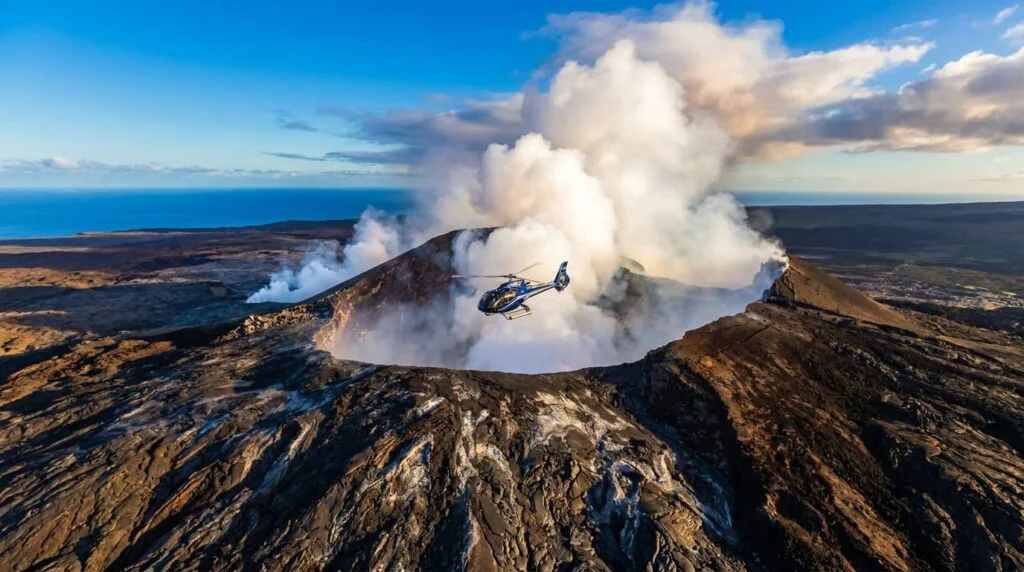
Since late 2024 the volcano has been producing episodic fountaining at vents inside Halema’uma’u crater, at the summit of Kilauea within Hawai’i Volcanoes National Park. An episode begins, lava fountains — sometimes hundreds of feet — for a period of hours to days, then stops. Weeks can pass before the next one. Through 2026 these episodes have continued, with some producing fountains several hundred feet high and plumes visible from a long way off.
So the accurate answer to “can I see lava” is: maybe, if you are there during an episode, if the weather cooperates, and if the relevant overlooks are open. Three conditions, all outside your control.
How to Check Status Today
Bookmark these three and check on the morning you plan to go, not the week before:
- USGS Hawaiian Volcano Observatory — Kilauea volcano updates. Daily status, alert level, and live webcams pointed into the caldera. If the webcams show a glow, there is something to see. This is the single most useful source and it is free.
- NPS Hawai’i Volcanoes — eruption viewing and current conditions. Tells you which overlooks are open, whether roads are closed, and whether any part of the park is shut. Closures happen for volcanic gas, seismic activity, and storm damage, and can last from hours to months.
- The vog and weather forecast. Summit weather is wet and cloudy far more often than visitors expect. A clear night is a real piece of luck.
One thing worth internalising: an alert level of “watch” does not mean lava is visible, and “advisory” does not mean nothing is happening. Read the actual daily text, not just the colour code.
Where Lava Is Visible When It Is Visible
| Location | What you may see | Access |
|---|---|---|
| Halema’uma’u / caldera overlooks | Fountaining and glow during an active episode | Short walk from parking near the park entrance |
| Kilauea Overlook & Uekahuna area | Wide caldera views, glow at night | Inside the park; subject to closure |
| From the air | Active vents and flow fields no road reaches | Helicopter tour, weather permitting |
| Chain of Craters Road / coast | Old flow fields, not current activity | Drivable, 19 miles each way, no services |
| Outside the park | Generally nothing — flows are inside park boundaries | n/a |
Note the last row. Since the 2018 lower Puna eruption ended, there has been no roadside lava viewing outside the park. If someone offers to drive you to a lava flow in a neighbourhood, that is not a thing that currently exists.
Night Beats Day, Comfortably
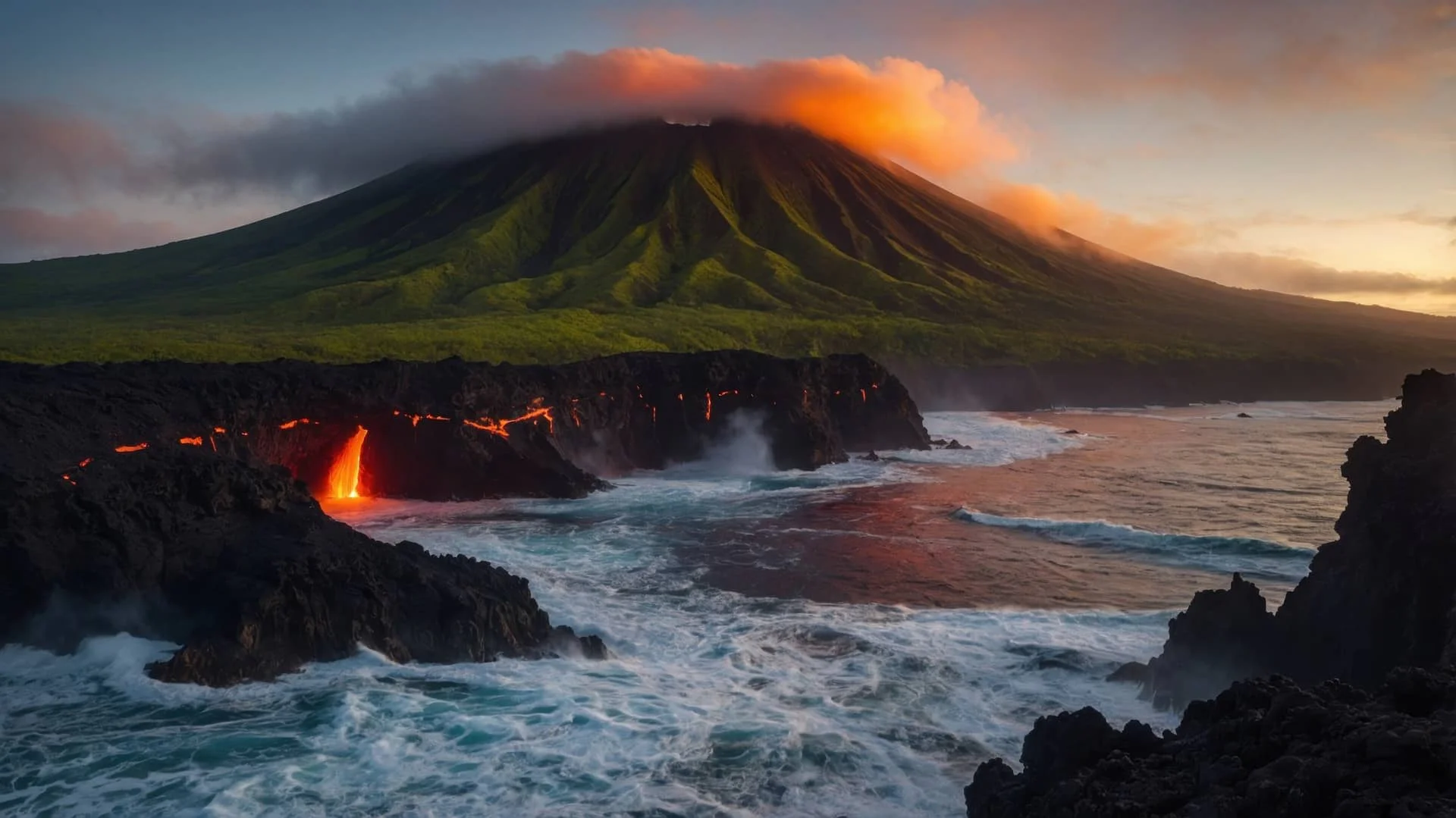
Incandescence is a contrast phenomenon. In daylight, even vigorous fountaining can look like an unremarkable steam plume with an orange tint. After dark, the same activity lights the underside of the plume and reflects off the crater walls, and the effect is genuinely startling.
If there is an active episode during your stay and you can only go once, go at night. Base yourself in Volcano Village if possible, bring layers — the summit is cold and wet after dark — and a headlamp for the walk back. The Evening Volcano Tour from Kona is built around exactly this, combining sunset, coffee, and crater glow, and it saves you a long drive home in the dark.
If There Is No Lava — Which Is Often
This is the part worth planning for, because statistically it is the likelier outcome on any given day. The park does not become uninteresting between episodes:
- Nahuku (Thurston Lava Tube) — walk through a lava conduit that drained out five centuries ago.
- Kilauea Iki — descend 400 feet and cross the floor of a crater that held a churning lava lake in 1959. Steam still rises from cracks.
- Chain of Craters Road — nineteen miles down to the coast across enormous old flow fields, ending at the Holei Sea Arch.
- Steam vents and sulphur banks — the ground itself venting, right by the road.
- Lava tube caving — the Private Kilauea Iki & Lava Tube Hike pairs the crater floor with an underground section.
- Black sand and turtles — the Punalu’u Black Sand Beach & Volcano Tour shows what the flows eventually become.
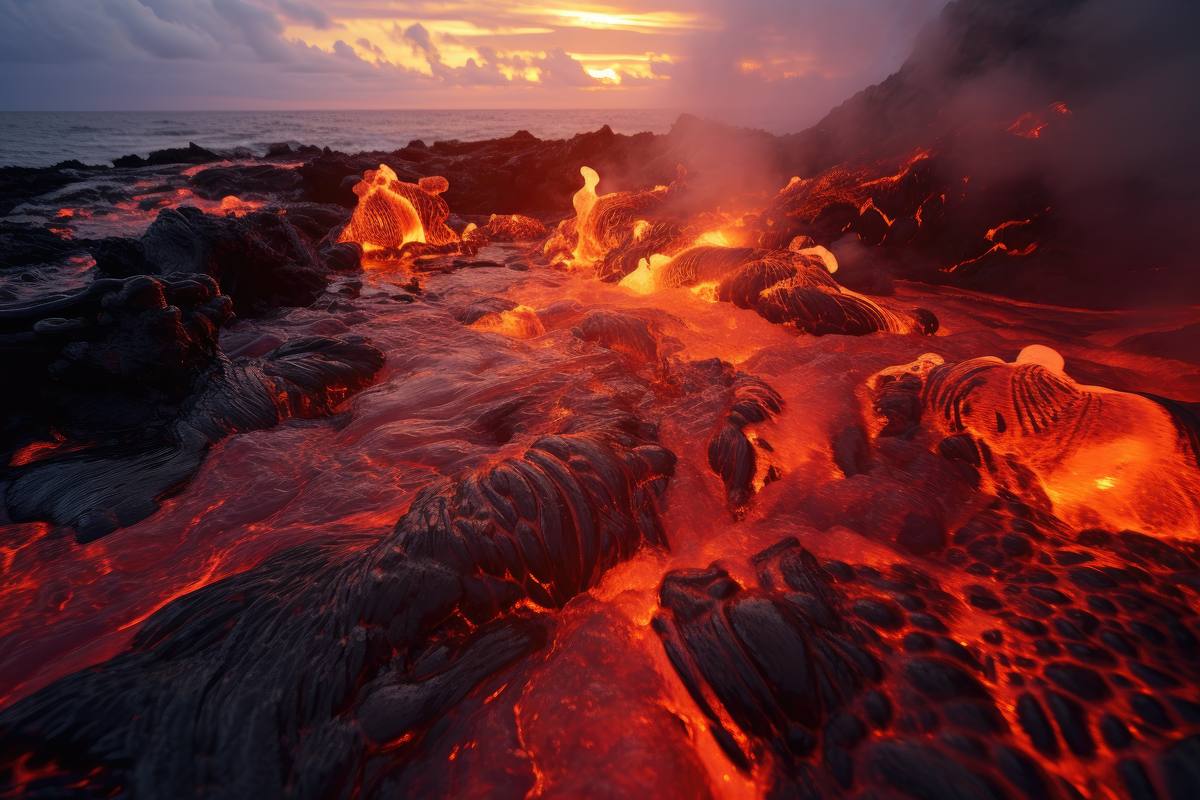
- Ride the 2018 flow — the Beach Cliffs Fat Tire E-Bike Tour runs along the lava coast created by the last big eruption.
“The volcano does not perform on request. Treat visible lava as a windfall and the park as the reason you came, and you will have a good day either way.”
Improving Your Odds
- Stay near the park. Volcano Village puts you minutes from the gate, so you can go the moment an episode starts.
- Give yourself several days on the island. One fixed evening is a coin flip; three flexible ones are a decent bet.
- Go at night. Same activity, far more visible.
- Add a helicopter. Air access reaches vents and flow fields that ground overlooks cannot, and flies when overlooks are shut — try the Hilo Volcano Helicopter Tour or the Kona Volcano Helicopter & Ground Tour.
- Book a guide who tracks conditions. Operators running the park daily know which overlooks are open this morning. The Private Volcano Tour from Hilo and the Custom Volcano Park Tour both flex around the day’s reality.
- Do not chase it off-island on a whim. If you are on Oahu, the Flexible Big Island Volcano Tour from Oahu exists and is flexible by design — but check status before you commit.
Planning the wider visit? See our complete Hawai’i Volcanoes National Park guide, or compare departure points in Kona vs Hilo. Browse Big Island volcano tours or the whole Big Island range.
For a day on two wheels, bike tours in Hawaii compares the self-paced Haleakala downhill rides with the Big Island’s e-bike tour across the 2018 lava coast.
Frequently Asked Questions
Is Kilauea erupting right now?
It erupts in episodes. Check the USGS Hawaiian Volcano Observatory daily update and live caldera webcams for status on the day you plan to visit.
Where can you see lava in Hawaii?
Only inside Hawai’i Volcanoes National Park on the Big Island, from caldera rim overlooks near the entrance, and only during an active episode.
Is it better to see lava at night?
Yes, substantially. Incandescence depends on contrast — activity that looks like a steam plume at midday lights up the plume and crater walls after dark.
Can you walk up to lava in Hawaii?
No. Active vents sit within closed areas for genuine safety reasons — unstable ground and volcanic gas. Viewing is from designated overlooks at a distance.
What if there is no lava when I visit?
The park is still worth a full day — the Nahuku lava tube, the Kilauea Iki crater floor, steam vents, and Chain of Craters Road are all unaffected.
Keep reading
Go when the volcano is worth going.
Evening glow tours, helicopter flights over active vents, and guided park days that flex around conditions.
Volcano Tours · Helicopters · All Big Island · (808) 207-9427
Disclaimer: volcanic activity changes hour to hour and this page cannot reflect live conditions. Always check the USGS Hawaiian Volcano Observatory and National Park Service conditions before travelling. Never enter a closed area, and treat all posted warnings as binding.