Hawaiian Activities — island tours, luaus, and adventures across Oahu, Maui, Kauai, and the Big Island.
Every argument about where to learn ignores the one fact that settles it: the swell moves. Get the season right and both coasts are excellent. Get it wrong and only one of them is safe.
Quick Answer: Waikiki is the safe answer year-round — slow, rolling waves that hold their shape, and you can walk there. The North Shore is excellent for beginners in summer (May–Sep) and unsuitable in winter (Nov–Mar), when the big swell arrives. Book mornings, when the wind is lightest.
TL;DR
- Swell switches sides: north shores get winter swell, south shores get summer swell
- Waikiki: gentle and slow year-round, but genuinely crowded
- North Shore: great for beginners May–Sep, unsuitable Nov–Mar
- More push = easier to stand up, which favours summer North Shore
- Mornings are best — lightest wind, cleanest water
- Kauai’s Poʻipu and Hanalei are quieter alternatives
The Answer Depends on the Month
Almost every “Waikiki or North Shore” argument online ignores the single fact that decides it: Hawaiian swell switches sides with the season.
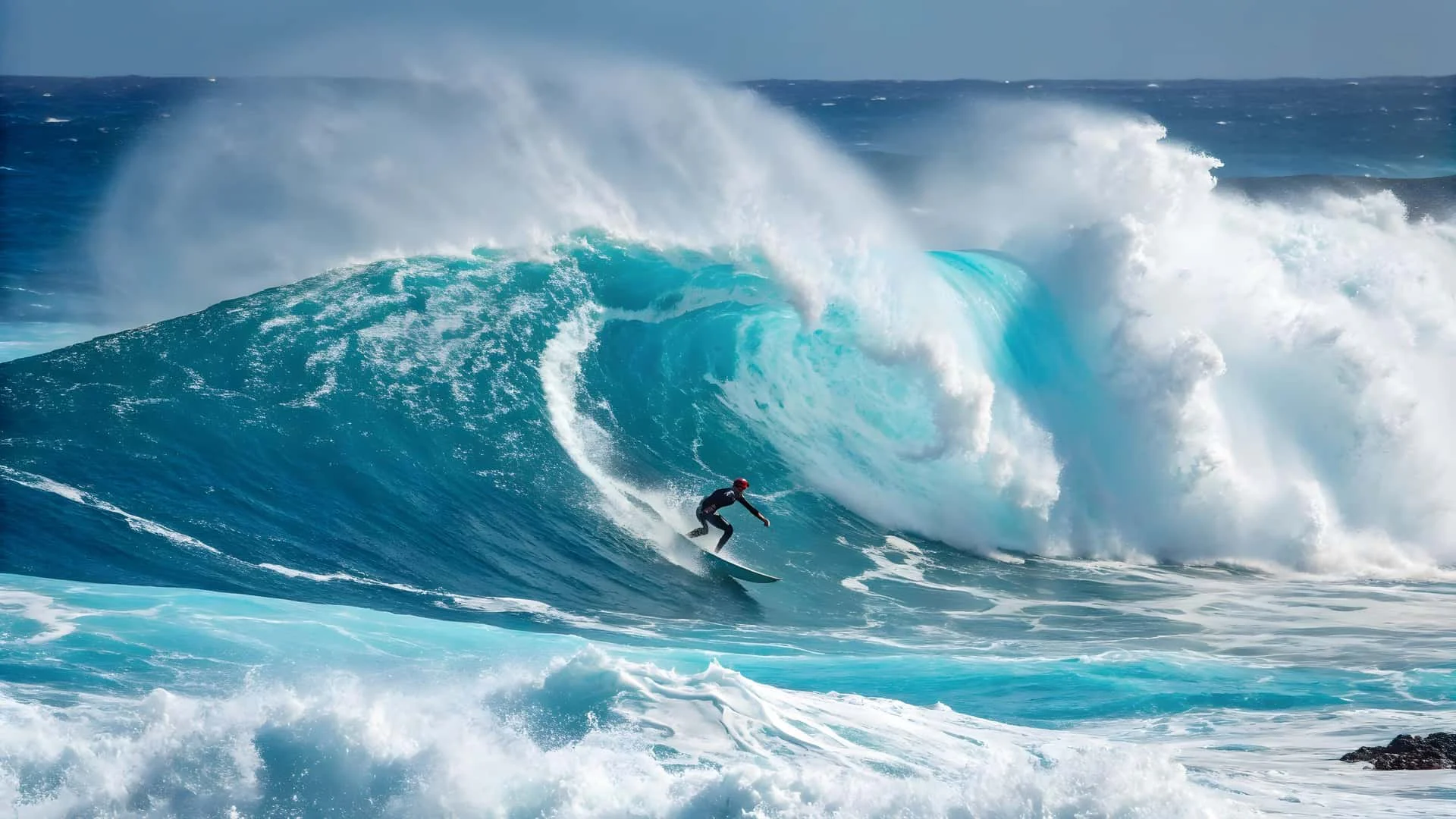
From roughly November to March, North Pacific storms send big swell to the north-facing shores. That is when the North Shore becomes the Pipeline of legend — and becomes completely unsuitable for a first lesson. In the same months, Waikiki on the south shore is small, clean and gentle.
From roughly May to September, the pattern reverses. Southern Hemisphere swell reaches the south shore, giving Waikiki a bit more size, while the North Shore lies down and becomes genuinely mellow — and beginner-friendly at spots like Puaʻena Point near Haleiwa.
So the real answer is: Waikiki is the safe default year-round. The North Shore is excellent for beginners in summer and a bad idea in winter.
| Waikiki | North Shore | |
|---|---|---|
| Winter (Nov–Mar) | Ideal — small, clean, gentle | Avoid for lessons — large and serious |
| Summer (May–Sep) | Good, slightly more size | Excellent — mellow and uncrowded |
| Wave type | Slow, rolling, long rides | More push, shorter, more powerful |
| Bottom | Sandy with some reef patches | Sand at beginner spots |
| Crowds | Very busy | Noticeably calmer |
| From Waikiki hotels | Walk | About an hour’s drive |
The Case for Waikiki
Waikiki is where surfing was taught to the world, and it is still the best beginner classroom in Hawaii for structural reasons rather than sentimental ones.
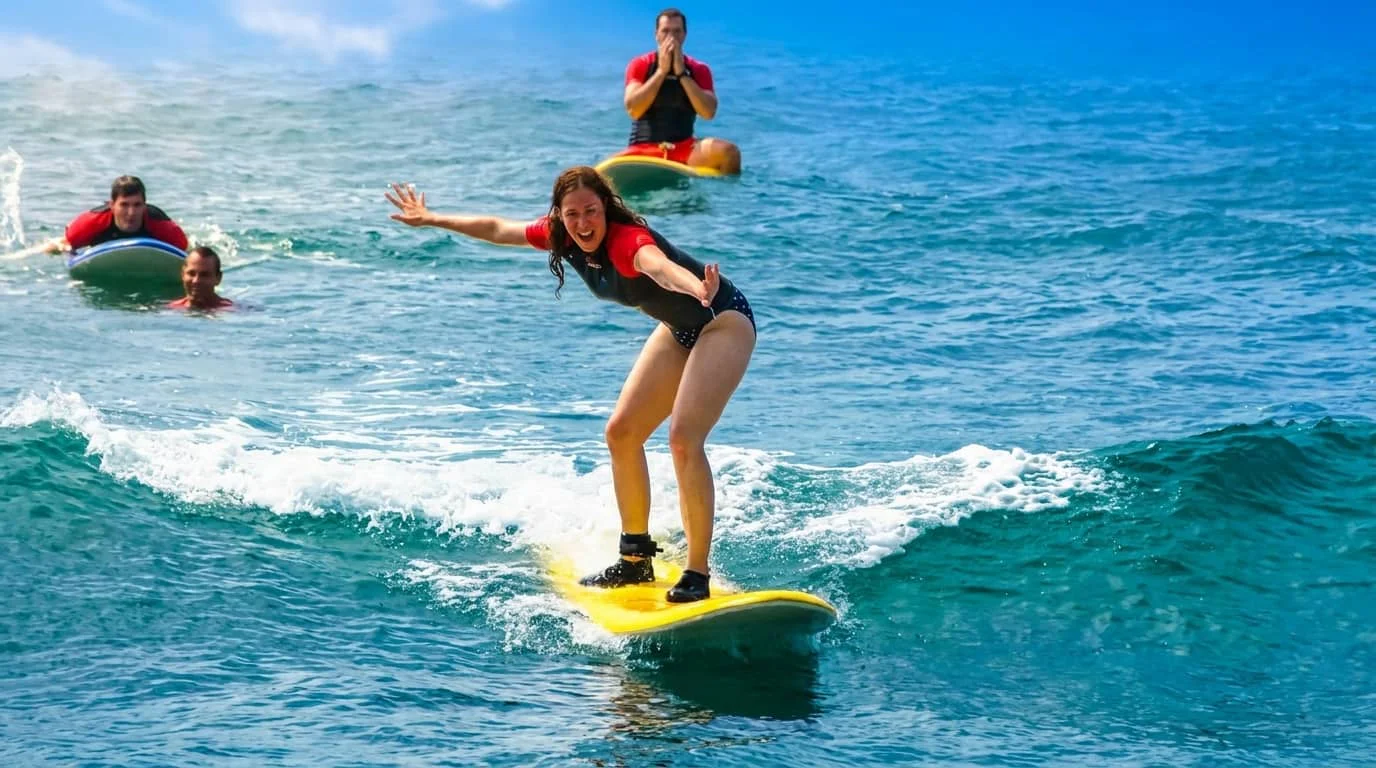
The waves build slowly and hold their shape over a long, gentle reef-and-sand bottom, giving rides that run a remarkable distance toward the beach. That extra time is precisely what a beginner needs: it is very hard to pop up on a fast, steep wave and quite easy on a slow, forgiving one.
It is also frictionless. You walk from your hotel, the water is warm, boards and instructors are everywhere, and if the first hour goes badly you can stop and have lunch. For a family with mixed enthusiasm levels, that matters.
The downside is people. Waikiki is genuinely crowded, and crowds mean other boards, dropped-in waves and more to think about. A good instructor manages this by positioning you away from the main pack, which is one of the clearest arguments for a lesson over a rented board.
Options: a straightforward Surf Lesson in Oahu covers all levels with gear included, and a Private Surf Lesson gets you one instructor to yourself — worth it in crowded water, where individual attention translates directly into waves caught.
The Case for the North Shore
In summer, the North Shore is arguably the better lesson — and most visitors never consider it because its reputation is built entirely on winter.
Between May and September the same coastline that hosts Pipeline goes quiet. Beginner-friendly spots around Haleiwa and Puaʻena Point offer waves with slightly more push than Waikiki, which counterintuitively makes standing up easier — more energy under the board means less frantic paddling to catch the wave in the first place.
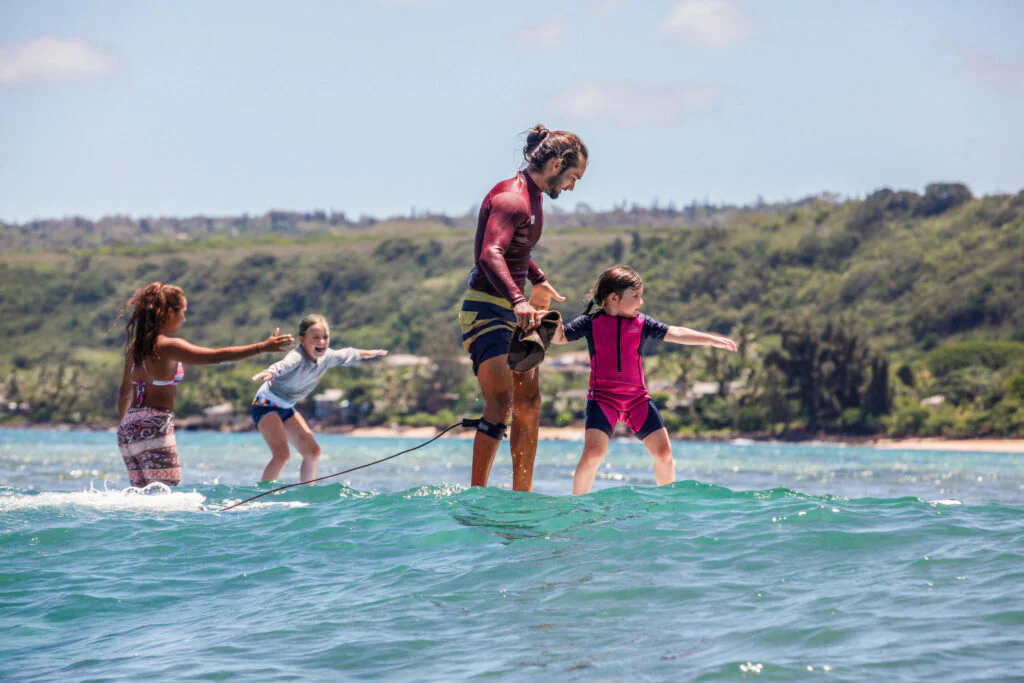
It is also far less crowded, the instructors are typically local watermen who have surfed that coast their whole lives, and the setting is a different world from a hotel frontage: green mountains behind, food trucks in Haleiwa, turtles on the beach at Laniakea.
The cost is the drive — about an hour each way from Waikiki, which turns a two-hour lesson into a half-day commitment. Most people bundle it with a North Shore day rather than driving up and straight back.
Something different: the North Shore Dog Surfing Experience puts you in the water with surfing rescue dogs, which is exactly as good as it sounds.
What About the Other Islands?
Oahu is the default for good reason, but it is not the only option. Kauai’s south shore at Poʻipu is a gentle, uncrowded beginner setup in winter, and Hanalei Bay on the north shore is lovely in summer. Try the Group Surf Lesson at Poʻipu Beach, the Private Surf Lesson on Kauai, or the 60-Minute Elite Surf Lesson at Hanalei Bay.
Not sure which island you are basing yourself on yet? Our guide to choosing a Hawaiian island covers the wider trade-offs.
“Pick the side of the island the swell is not currently pointing at. Everything else — crowds, scenery, price — is a preference. That one is physics.”
So Which Should You Book?
- Visiting November–March: Waikiki. This is not really a choice; the North Shore is unsuitable for beginners in those months.
- Visiting May–September and staying in Waikiki: either works. Waikiki for convenience, North Shore for a better lesson and a better day.
- Absolute first time, nervous: Waikiki, private lesson, morning session when the wind is lightest.
- Reasonably athletic, want to progress: North Shore in summer — that extra push gets you standing sooner.
- Travelling with children: Waikiki. Walk back to the hotel when they have had enough.
- Already based on the North Shore: surf there in summer, and drive to town in winter.
New to all of this? Read what actually happens in a first surf lesson. Browse Oahu surf lessons, Kauai surf lessons, or everything on Oahu. Already surf and only need a board? See surfboard rental prices on Oahu, from $8.
Frequently Asked Questions
Is Waikiki or the North Shore better for beginner surfing?
Waikiki year-round; the North Shore only in summer. From November to March, North Shore swell is far too large for a first lesson.
What is the best time of year to learn to surf in Hawaii?
Summer, May to September, gives the widest choice of safe beginner spots. Winter still works well at Waikiki on the south shore.
Can you learn to surf on the North Shore of Oahu?
Yes, in summer. Beginner spots around Haleiwa and Puaʻena Point are mellow from about May to September, with fewer crowds than Waikiki.
How long does it take to stand up on a surfboard?
Most people stand within their first lesson. Instructors use large soft-top boards and push you into the wave, which removes the hardest part.
Do you need to be a strong swimmer to take a surf lesson?
You should be comfortable in water over your head, but you do not need to be a strong swimmer. Boards are buoyant and lessons stay in shallow, sheltered water.
Stand up on your first wave.
Group and private surf lessons across Oahu and Kauai, boards and instruction included.
Oahu Surf Lessons · Kauai Surf Lessons · All Oahu Tours · (808) 207-9427
Disclaimer: ocean conditions change daily and seasonally, and surf size can vary sharply within a single day. Always follow lifeguard advice and your instructor’s guidance, and never enter the water at an unfamiliar break without local knowledge.